

























Some 50 European leaders are gathering in southern Spain to stress that they stand by Ukraine, at a time when Western resolve appears to have weakened.
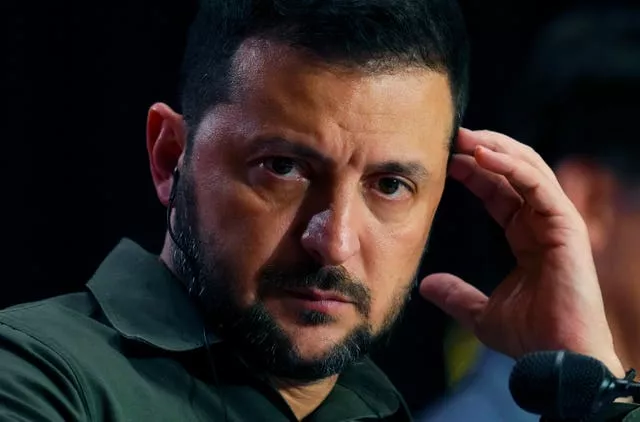
Ukrainian president Volodymyr Zelenskiy is at the meeting of the European Political Community forum in Granada, which was formed in the wake of Russia’s February 2022 invasion of Ukraine that drastically reset the continent’s political agenda.
Despite the political, economic and military support, the struggle to rid Ukraine territory of invading Russian has ground to a stalemate. Meanwhile, the steadfast opposition to Russian President Vladimir Putin has shown cracks because of internal strife both within the US and the European Union.
The leaders in Granada, however, are keen to stress they are united behind Ukraine.
“When it comes to facing down the threat from Putin,” British prime minister Rishi Sunak said, “there is strength in unity.”
The leaders will be able to deliver that message to Mr Zelenskiy in person as he arrived in Granada early on Thursday. He also attended the second EPC summit in Moldova earlier this year. Mr Zelenskiy is expected to ask all the allies to come forward with more aid and military support.
“Ukraine’s key priority, particularly as winter approaches, is to strengthen air defence,” Mr Zelenskiy said in a statement.
“We have already laid the groundwork for new agreements with partners and look forward to their approval and implementation. This should be a productive day for Ukraine and Europe as a whole.”
Support from Europe has become all the more important after the US Congress sent US president Joe Biden legislation over the weekend that kept the federal government funded but left off billions in funding for Ukraine’s war effort that the White House had vigorously backed.
Mr Biden called other world powers on Tuesday to co-ordinate on Ukraine in a deliberate show of US support at a time when the future of its aid is questioned by an important faction of Republicans who want to cut off money to Kyiv.
Most European leaders have since insisted their support for Ukraine is unwavering.
But last weekend’s election in Slovakia, where pro-Russia candidate Robert Fico was the big winner, and Hungary’s continued recalcitrance to fully back Ukraine have cast shadows in Europe.
The EPC is an informal gathering so formal decisions are off the table, but the leaders want to use the format to push for better relations and seek to settle disputes, whether lingering or live.
That makes it especially disappointing that Azerbaijan’s president Ilham Aliyev pulled out of the gathering at the last moment, when expectations had risen that a possible summit-within-the summit would unite key players and go-betweens in his country’s crisis with neighbouring Armenia.
The humanitarian tragedy of some 100,000 Armenians fleeing Nagorno-Karabakh, a part of Azerbaijan with a predominantly Armenian population, followed a military operation last month.
Instead, officials said that many leaders will be talking to Armenian prime minister Nikol Pashinyan to show backing for his government as it grapples with the humanitarian plight.
The forum of the European Political Community will still be a rare occasion where leaders of rival nations such as Serbia and Kosovo will be gathered in one plenary room. Any chance of rapprochement, though, is dim, since Kosovo will not be represented by its prime minister Albin Kurti, but by its president, Vjosa Osmani, whose role is largely ceremonial.