






























It’s every fitness fanatic’s dream to have a home gym. Finding the space,
painting the walls, and picking out equipment is all part of the experience.
Building a home gym empowers you to control your fitness journey in your own
space. However, amid the excitement of designing your ideal fitness haven, a
crucial question needs to be answered: How thick should the gym flooring
be?
The answer to this question can significantly impact your workouts’ safety,
performance, and overall experience. In this article, we delve into the
intricacies of selecting the right thickness for your gym flooring,
exploring various factors that should guide your decision-making
process.
Whether you’re lifting weights, doing cardio, or wrestling, understanding
the ideal gym flooring will ensure that your home gym is not only a place
for effective workouts but also one of safety and comfort.
Table Of Contents:
- How Thick Should Gym Flooring Be?
- How Big Should A Gym Floor Be?
- Types Of Gym Flooring
- Best Overall Home Gym Flooring Thickness
- Best Outdoor Gym Flooring Thickness
- Best Gym Floors for Plyometrics
- Best Gym Floor Thickness for Weight Lifting
-
Best Gym Flooring For Dumbbell
- Best Gym Flooring For Martial Arts And Wrestling
- How Much Does Gym Flooring Cost?
- FAQs
How Thick Should Gym Flooring Be?
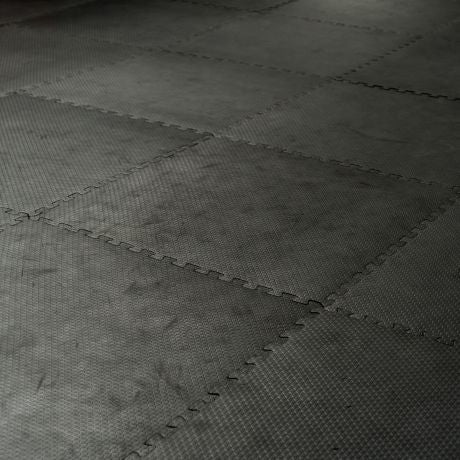
The thickness of gym flooring is a critical consideration, and there’s no
one-size-fits-all answer. You can find anything from 1/4th inch to 1 inch in
most home gyms.
Several factors come into play when determining how thick your gym flooring
should be
-
Type of Exercise: The training you plan to do in your gym is a
significant factor. For activities like CrossFit and Olympic
weightlifting, where heavy weights are dropped, thicker flooring is
essential to absorb impact and protect your subfloor. Even with heavy
powerlifting, you will want a thicker floor. For this type of training,
opt for 3/8 to 1-inch mats. -
Floor Material: The existing flooring material can influence your
decision. If your gym is on a hard surface like concrete, you’ll need
thicker flooring to provide sufficient cushioning and shock absorption.
Conversely, if you have a carpeted floor, you might get away with thinner
gym flooring. -
Budget: Cost is a significant factor for many people. Thicker
gym flooring tends to be more expensive. If you’re on a tight budget, you
may opt for thinner mats or tiles while considering other strategies to
minimize the impact. -
Sound Insulation: If noise is a concern, especially in a shared building
or apartment, thicker gym flooring can help dampen sound and reduce the
disturbance to neighbors or other occupants. -
Durability: Thicker gym flooring often has better durability,
which means it can withstand heavy use and the rigors of weightlifting
equipment. Thinner mats may wear out more quickly.
How Big Should A Gym Floor Be?
The size of a home gym floor can vary widely depending on your available
space, fitness goals, and the exercises you plan to do. It’s essential to
figure this out beforehand so you can order your flooring and get it laid
down before any other gym equipment arrives.
-
Space Availability: The most significant limitation of your gym’s size is
available space. Start by measuring the area you can allocate to your home
gym. Consider any other non-fitness equipment or furniture that needs to
coexist in the same room. -
Exercise Needs: Consider the types of exercises you plan to perform.
For basic cardio workouts and bodyweight exercises, a smaller space may
suffice. However, if you’re incorporating weightlifting, a larger area
with enough room for weight racks, benches, and adequate clearance is
essential. You will want enough gym flooring to cover all of your
equipment. -
Storage Area: Consider whether you need space for storage, such as
racks or shelves for weights and accessories. Having an organized storage
area can keep your gym space clutter-free and functional. -
Multi-Purpose Use: If you plan to use the gym area for other activities,
like stretching, or as a play area for children, factor that into your
flooring requirements. You may only need gym flooring for part of the
area. -
Budget: Your budget can also influence the size of your home
gym. It’s okay to start small. Flooring and equipment can be expensive.
Make sure to strike a balance between your fitness goals and budget
constraints.
Types Of Gym Flooring
As discussed, gym flooring mats have various types and thicknesses to
accommodate different workout needs and preferences. Here is a list of some
common types of gym flooring, along with their typical thickness
ranges:
1) Rubber Flooring
-
Rolled Rubber: Thickness ranges from 1/4 inch to 1 inch or
more. - Rubber Floor Tiles: Thickness can vary from 1/4 inch to 1 inch.
2) Foam Flooring
3) Vinyl Flooring
- Vinyl Rolls: Thickness ranges from 1.5mm to 5mm or more.
- Vinyl Tiles: Thickness can vary from 2mm to 5mm.
4) Turf Flooring
Best Overall Home Gym Flooring Thickness
If I had to pick the best overall thickness for gym flooring, it would be
an 8mm (just under 1/3 inch) rubber floor.
This thickness is versatile enough to accommodate different workouts,
making it an excellent choice if you have a diverse fitness routine. Whether
lifting weights, doing yoga, or engaging in high-intensity interval training
(HIIT), 8mm flooring balances cushioning and stability.
Additionally, this rubber flooring thickness
is durable and can withstand the demands of a home gym for many years. It
helps protect your gym equipment and the underlying subfloor from damage
over time.
Our top pick is IncStores 8mm Titan Rubber Interlocking Floor Tiles, but for more home gym ideas, check out this article: 4 Best Home Gym Ideas
& Setups We’ve Ever Seen.
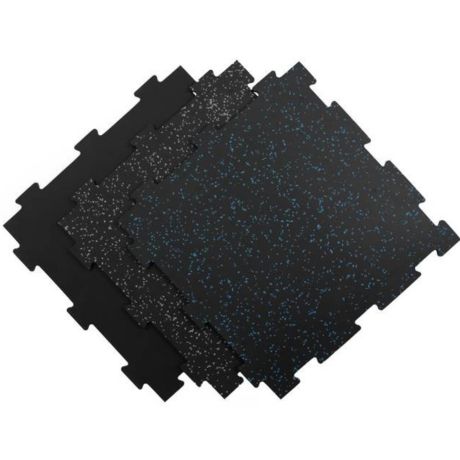
Welcome to Mount Olympus, where even the gods themselves train on Titan’s 8mm Rubber Tile. With its easy installation and maintenance, you’ll have more time to perfect your…
Best Outdoor Gym Flooring Thickness

When setting up a home gym outside, you need to account for the effects of
the weather. From a flooring standpoint, you want something that can handle
the elements and be effective for your workouts. The best option is rubber
horse stall mats. They are thicker (3/4 inch), so you can do any training
you want with them. The best part is the price. A 4 x 6 rubber mat is less
than $50.
Here is a home gym user’s experience:
“The rubber horse stall mats I got from Tractor Supply have channels on
their underside for moisture control. The Tractor Supply I purchased them
actually stored them outside, fully exposed to the elements. They have no
sign of algae, etc.” (source)
Best Gym Floors for Plyometrics
To do plyometrics and other athletic-style training, you will need flooring
to accommodate the various movements. One option is turf. Plyometrics
involve explosive moves like jumps, bounds, and agility drills that strain
the joints significantly and require a surface that offers stability and
shock absorption.
Turf flooring provides several key advantages for plyometric workouts. Its
surface is designed to be forgiving on the joints, reducing the risk of
injuries during high-impact movements. The natural texture of turf also
offers excellent traction, promoting stability and preventing slips or
slides, which is crucial for precise and safe plyometric exercises.
Additionally, the slight cushioning of turf flooring helps absorb shock and
impact forces, sparing your joints from excessive stress. Furthermore, turf
is durable, easy to clean, and can withstand the wear and tear of intense
workouts, making it a practical and efficient choice for home gyms focused
on plyometrics.
Its versatility extends beyond plyometrics, as it can also be used for
various agility drills, prowler, and functional training exercises, making
it a perfect multi-purpose surface for dynamic workouts in a home gym
setting. We really like the
Agility Turf Rolls from IncStores
for our indoor plyometric workouts.
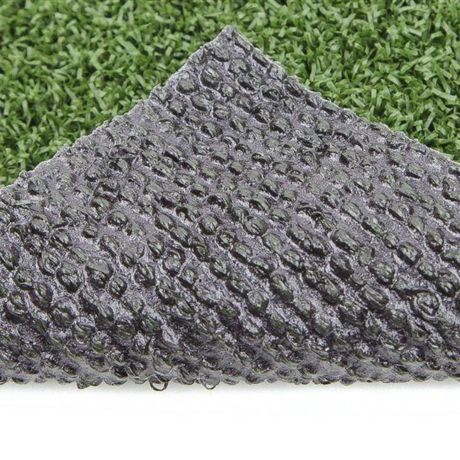
Agility turf rolls are made with a nylon fiber and are recommended for indoor use only. These rolls can be used in both commercial and residential applications and are great for…
Best Gym Floor Thickness for Weight Lifting
For lifting weights, thick rubber flooring (3/8 – 3/4 in) is one of the
best choices. First, rubber offers exceptional durability, capable of
withstanding the heavy use and wear and tear associated with heavy
lifting.
Secondly, thick rubber tiles provide a stable surface to lift on. One of
the biggest mistakes people make when they want to lift heavy is getting
foam flooring. The foam compresses under your feet, creating an unstable
surface. That is the exact opposite of what we want when lifting
weights.
Additionally, if you plan to do Olympic lifts (snatch and clean) or heavy
deadlifts, it makes sense to get a lifting platform. A lifting platform is a
dedicated area with a reinforced surface, often wood and rubber, designed to
provide stability and shock absorption. It offers a secure foundation for
lifting heavy weights while protecting the gym floor and reducing noise. You
can make a platform with a couple of pieces of plywood covered by
rubber.
For the best rubber flooring to put atop your home gym lifting platform, look
no further than
IncStores Impact Foam Rubber Tiles. At 3/8 inches thick, these 2’x2′ interlocking foam mats allow you to
construct your flooring to the specs of your platform and available space.
They’re waterproof and anti-slip, which makes them perfect for extra sweaty or
even outdoor sessions. Finally, the closed cell EVA foam provides a great
impact profile, and the top layer is crafter from recycled rubber for extra
grip underfoot.

New and improved, these interlocking Impact Rubber Tiles are still the ideal non-slip rubber floor for any home gym. Constructed using an innovative production process, these foam rubber tiles…
Best Gym Flooring For Dumbbell Areas
If your home gym will only have dumbbells, you have many options for
flooring. For the most part, you want something that can protect your
floors. Of course, rubber will work, but you can get by with a thinner foam
or vinyl to save some money.
We like the versatility of these
Snap Together Dance Floor Tiles by IncStores
because they’re easy to install, offer a variety of prints to match your home
gym aesthetic, and come in 10 different bulk-buying options to save you some
money.
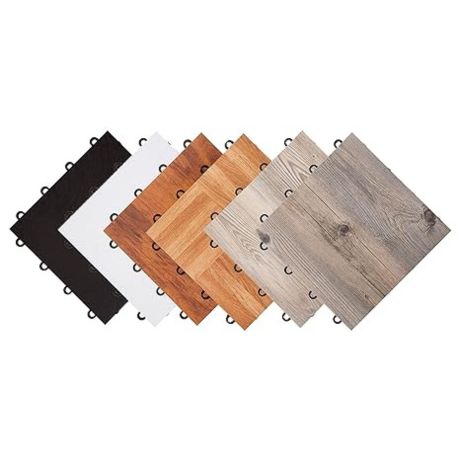
Our Practice Dance Floor Tiles are durable, and can even be used as event flooring with heavy traffic. Whether you are setting up a home gym or small dance area, these tiles…
Best Gym Flooring For Martial Arts And Wrestling
Growing up a wrestler, I always dreamed of having a mat in my own garage
gym. However, not to age myself, but wrestling mats used to be much harder
to find. Luckily, now you have a lot of options. Look for an 8 x 8 or 10 x
10 wrestling mat that is 1.25 inches thick. It will work excellently for any
wrestling or martial arts training you want to do.
IncStores Rollout Wrestling Mats
are our first pick for home gyms or training on the go. They’re 1 and 5/8
inches thick, made from closed-cell EVA foam rubber, and topped with
heavyweight vinyl to maximize cleanliness. Plus, they’re lightweight and
complete with underside relief cuts to allow for easy rollout anywhere, at
anytime.
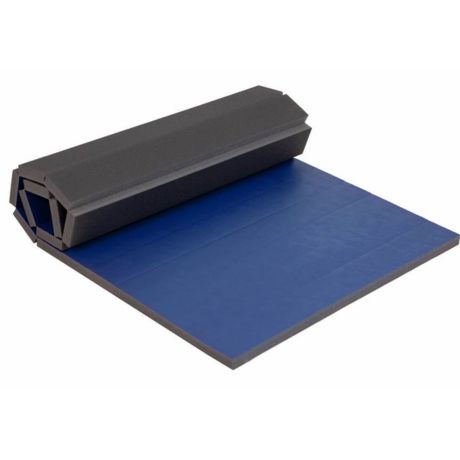
These durable Home Wrestling Mats are perfect for beginners practicing their moves or for general fitness and exercise in the home. Lightweight and portable, these roll out mats can easily be moved from space to space…
How Much Does Gym Flooring Cost?
The information on gym flooring is necessary, but let’s get down to the
brass tacks. How much does it cost?
The cheapest type of gym flooring will be foam tiles. While not great for
heavy lifting or plyometrics, if you are only going to be doing some light
dumbbell work and stretching, you can get by with this. Most foam
interlocking tiles will cost around $1 per squat foot.
The next level up is what I consider the best overall value. Horse stall
mats are thick, rubber mats you can do any type of training on. The best
part is they only cost around $2 per square foot.
If you like the idea of using rubber gym floor mats but want something that
looks nicer than horse stall mats, you can go with a rubber roll. A rubber
roll will have a high-end look and feel, which most commercial gyms use. The
only downside is the price. It will cost you around $3 per square
foot.
Last but not least is turf. Turf is expensive, but most people only use
turf for part of their gym. In that case, you can have half the gym rubber
with the other half turf. It’s the best of both worlds. Most turf will cost
between $3-4 per square foot.
FAQs
Here are some answers to some common questions about gym flooring.
Why do gyms need special flooring?
Gyms need particular flooring to absorb shock, reduce noise, and protect
both the subfloor and equipment. Gym flooring also offers slip resistance,
easy maintenance, and durability, making it crucial for a safe and
functional workout environment.
What are the standards for gym flooring (for commercial
gyms)?
Commercial gyms often adhere to industry standards, which typically
recommend gym flooring thickness of at least 3/8th inch (8-10mm). These
standards prioritize safety, durability, and shock absorption to accommodate
various exercises and equipment.
Do you need underlay for gym flooring?
The need for underlay depends on the type of gym flooring and the
subfloor’s condition. Underlay can provide extra cushioning, reduce noise,
and address minor imperfections in the subfloor, making it a good option for
certain gym setups.
Can you put gym flooring over concrete?
Yes, you can install gym flooring over a concrete floor. In fact, concrete
is a common subfloor for garage gym areas. Properly chosen gym flooring,
such as rubber or foam mats, provides the necessary cushioning and
protection over concrete surfaces.
Is foam or rubber better for the gym floor?
The choice between foam and rubber for gym flooring depends on your needs.
Rubber is durable and suitable for high-traffic and heavy-weight areas,
while foam is softer, making it ideal for yoga and mobility exercises.
Select the material that best aligns with your gym’s primary
activities.
Should I glue down rubber gym flooring?
In most cases, gluing down rubber gym floors is not necessary. However, if
keeping the rubber gym flooring mats in place is an issue, you can try
carpet tape.
Thickness For Gym Flooring: Key Takeaways
To wrap things up, the cost of gym flooring can vary widely based on
factors such as the type of material, thickness, quality, and the size of
your gym space. Whether considering budget-friendly options or investing in
high-end, durable flooring, weighing the long-term benefits against the
upfront expense is essential.
Ultimately, the right gym flooring choice should align with your fitness
needs, budget, and aesthetic preferences. We hope this article has provided
valuable insights to help you decide on your gym flooring investment.
Remember that the right flooring enhances your workout experience and plays
a crucial role in creating a safe and supportive fitness environment.
For more information on how to create the perfect budget home gym, check
out our article: How To Create The Perfect Budget & Space Friendly Home Gym.