

























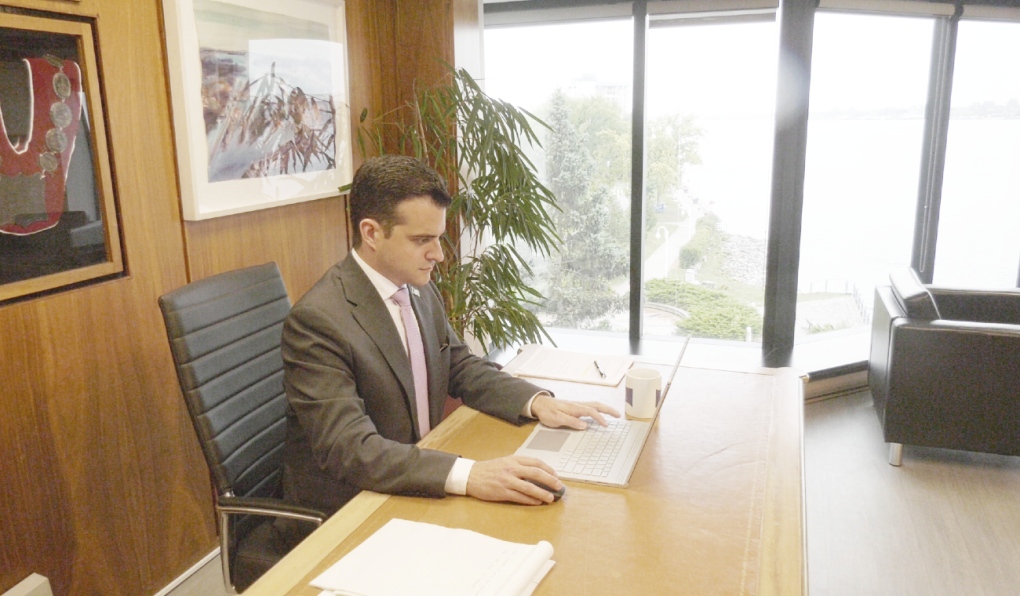


Ottawa has expelled a senior diplomat of India after Canadian Prime Minister Justin Trudeau lent credence to the allegation of secessionist organisation Sikhs for Justice about New Delhi’s role in the killing of the ‘Khalistan Tiger Force’ commander Hardeep Singh Nijjar in the North American country.
New Delhi retaliated by summoning Canada’s High Commissioner to India, Cameron MacKay, to the Ministry of External Affairs early on Tuesday. It also expelled a senior diplomat of Canada from India. It stated that the action reflected the growing concern of the government of India over the interference of Canadian diplomats in internal matters of India and their involvement in anti-India activities.
India dismissed the allegations as ‘absurd’ and ‘motivated’. The Ministry of External Affairs (MEA) of the Government of India stated that the Canadian Prime Minister’s “unsubstantiated allegations” about the role of New Delhi in the “act of violence” in his country were intended to shift the focus from the shelter being provided to the terrorists and extremists in Canada.
Ottawa expelled Pavan Kumar Rai, one of New Delhi’s diplomats in Canada, shortly after Trudeau told the House of Commons – the lower house of the country’s parliament – that he had briefed British Prime Minister Rishi Sunak, French President Emmanuel Macron and United States President Joe Biden about the probe into the link between the killing of Nijjar and the agents of the Government of India.
Rai was in charge of community affairs at the High Commission of India in Ottawa. Though Canada’s Minister of Foreign Affairs, Melanie Joly, did not name Rai while announcing the decision to expel him, her office later identified him.
Joly had earlier said that the expelled diplomat was in charge of India’s external intelligence agency, Research and Analytical Wing, in Canada.
Nijjar had been living in Canada since the late 1990s, but had remained one of India’s most wanted fugitives. He has been accused in several cases in India, including the 2007 blast that killed six and injured around 40 people at Ludhiana in Punjab. He was accused of being involved in the assassination of Rashtriya Sikh Sangat president Rulda Singh at Patiala in 2009.
The National Investigation Agency (NIA) of the Government of India, had in July 2022, declared a bounty of Rs 10 lakh on Nijjar, who was not only the commander of the terrorist organisation Khalistan Tiger Force, but was also involved with the Sikhs for Justice (SFJ). He was heading the Guru Nanak Sikh Gurdwara, Surrey at Vancouver in British Columbia, Canada, till his murder on June 18.
The SFJ, over the past few months, circulated flyers with pictures of India’s envoy to Canada, Sanjay Kumar Verma, and other senior diplomats posted in the country, identifying them as ‘killers’ of Nijjar. The organisation ran similar campaigns in the United States, Australia and the United Kingdom too.
The relations between New Delhi and Ottawa came under stress in the past few years over the campaign by the pro-Khalistani Sikh organisations against India in Canada. New Delhi has been conveying its concerns to Ottawa over the Trudeau government’s alleged reluctance to act against the extremists and terrorists sheltered in the country who are posing a threat to the sovereignty and territorial integrity of India.
“Canadian security agencies have been actively pursuing credible allegations of a potential link between agents of the Government of India and the killing of a Canadian citizen, Hardeep Singh Nijjar,” Trudeau said at the House of Commons of his country on Monday. “Any involvement of a foreign government in the killing of a Canadian citizen on Canadian soil is an unacceptable violation of our sovereignty. It is contrary to the fundamental rules by which free, open and democratic societies conduct themselves.”
“As you would expect, we have been working closely and coordinating with our allies on this very serious matter,” added the Canadian Prime Minister.